Quick answer
The best snorkeling in Byron Bay occurs at Julian Rocks Nguthungulli Marine Reserve, accessible year-round with no entrance fee. Morning departures between 07:30 and 10:00 offer optimal visibility, typically 15-25 meters during calmer ocean conditions. The reserve remains open daily, though boat operators schedule trips based on weather and swell patterns.
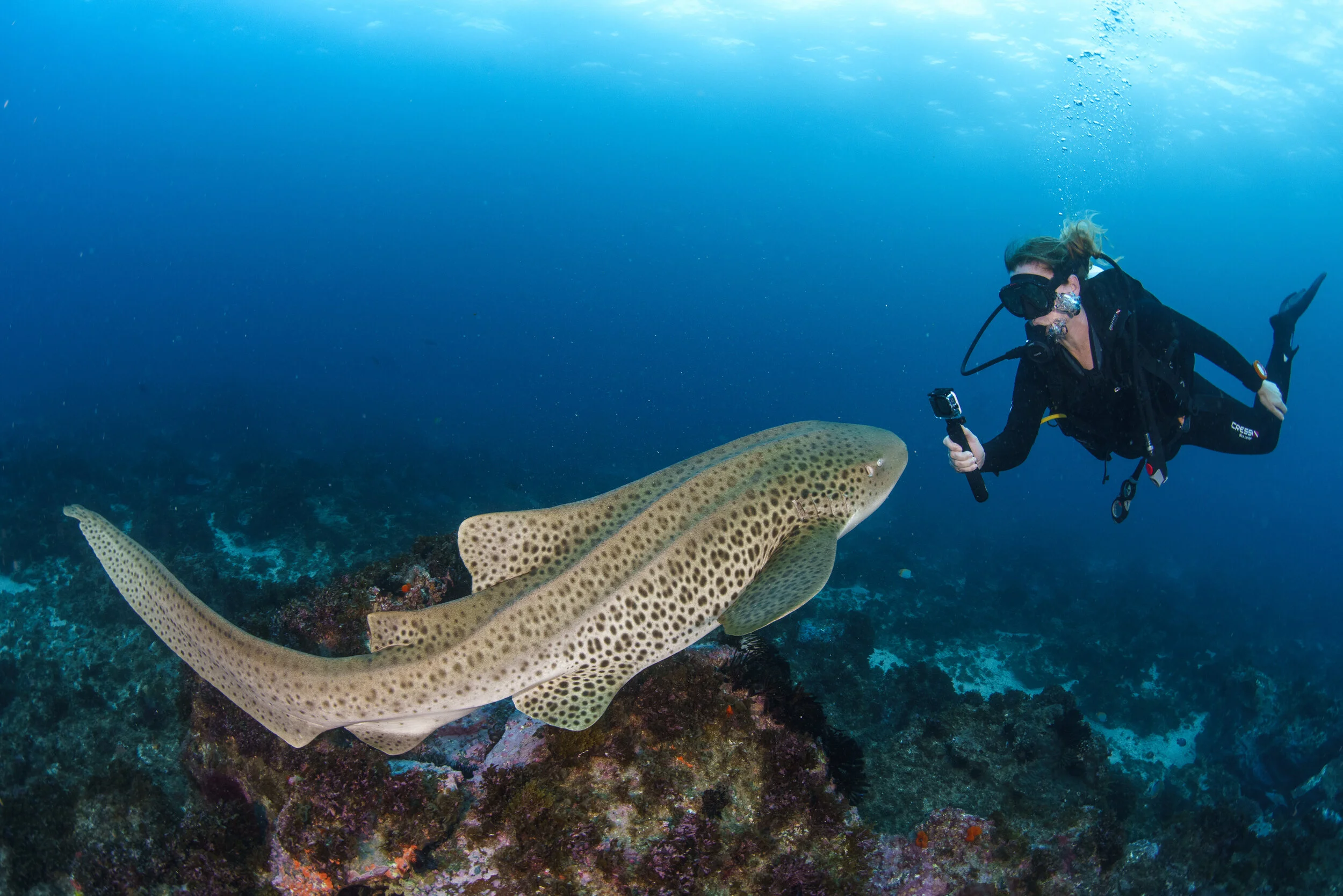
Julian Rocks Nguthungulli Marine Reserve hosts over 500 marine species within a protected zone smaller than 20 hectares. The twin volcanic peaks create channels and gutters where grey nurse sharks aggregate between June and November, while manta rays patrol the northern ridge from May through August. Leopard sharks rest in sandy pockets year-round, and loggerhead turtles forage among the rock formations regardless of season. The reserve's biodiversity stems from its position at the convergence of the East Australian Current and cooler Tasman waters. Tropical species like wobbegong sharks and moray eels coexist with temperate fish schools typically found hundreds of kilometers south. Four distinct dive sites ring the rocks—The Nursery, The Cod Hole, Turtle Alley, and The Split—each requiring boat access from Byron Bay's main beach or Belongil. Snorkeling Byron Bay's premier marine site means understanding ocean conditions rather than fixed schedules. Visibility fluctuates with tides, recent rainfall, and plankton blooms. Local operators assess conditions daily, sometimes canceling trips when swells exceed two meters or wind chop reduces surface clarity below five meters. Winter months bring clearer water but cooler temperatures, while summer offers warmer swims with occasional reduced visibility from nutrient upwelling. Marine reserve regulations prohibit fishing, anchoring in certain zones, and disturbing wildlife. Snorkelers maintain three-meter distances from grey nurse sharks and avoid flash photography near resting species. The reserve's protection allows close encounters with marine life that would flee in unprotected waters, making Byron Bay snorkeling uniquely accessible compared to other Australian temperate sites.
“The convergence of tropical and temperate currents creates encounters with species rarely seen together anywhere else in Australian waters.”
The Best Time for Snorkeling in Byron Bay at Julian Rocks
The optimal window for snorkeling Julian Rocks Nguthungulli Marine Reserve is the early morning arrival of 07:30–10:00, which provides superior water clarity and calmer sea conditions. This period typically aligns with the lightest winds of the day, reducing surface chop for easier entry and exit.
Summer (Dec–Feb)
High; popular with touristsWarm water 24–26°C, occasional rain
Increased marine activity and warmer temperatures prevail.
Autumn (Mar–May)
Moderate; more consistentMild water 21–24°C, calmer seas
Visibility often improves as seasonal swells decrease.
Winter (Jun–Aug)
Low; quiet on the waterCooler water 19–21°C, clear visibility
Gray nurse sharks are frequently sighted during these months.
Spring (Sep–Nov)
Moderate; rising visitor numbersWarm water 20–23°C, pleasant conditions
Water temperatures begin to rise steadily.
Verdict: The best slot is an early morning visit between 07:30–10:00, ideally during the autumn months of March to May for a balance of visibility and water temperature.
Opening Hours for Snorkeling in Byron Bay
Julian Rocks Nguthungulli Nature Reserve is a marine protected area accessible to the public 24 hours a day, seven days a week. As a natural marine environment, the reserve remains open at all times for aquatic activities.
| Monday | 00:00–23:59 | |
|---|---|---|
| Tuesday | 00:00–23:59 | |
| Wednesday | 00:00–23:59 | |
| Thursday | 00:00–23:59 | |
| Friday | 00:00–23:59 | |
| Saturday | 00:00–23:59 | |
| Sunday | 00:00–23:59 |
How to Reach the Best Snorkeling in Byron Bay
Julian Rocks Nguthungulli Marine Reserve is located off Cape Byron, Byron Bay NSW 2481, Australia. As the reserve is situated approximately 2.5 kilometres offshore, visitors must access the site via boat transport provided by local operators.
Park at the Boat Harbour or the main beach area in Byron Bay
Local snorkel tour vessels depart from the Byron Bay Boat Harbour or Main Beach
Checklist for Your Snorkeling in Byron Bay Trip
Julian Rocks sits 2.5 km offshore in open ocean, demanding proper gear and marine safety awareness.
-
Arrange transport to dive operators — Boats depart from Byron Bay harbor; the reserve is only accessible by vessel.
-
Bring or rent snorkeling equipment — Most operators supply gear, but bring your own if preferred for fit and hygiene.
-
Pack reef-safe sunscreen — Chemical sunscreens damage the marine reserve ecosystem and are discouraged.
-
Wear a wetsuit or rash vest — Water temperatures range 19–26°C; protection also prevents sunburn and jellyfish stings.
-
Check ocean conditions before departure — Operators cancel trips in poor visibility or rough seas; confirm the morning of your visit.
-
Carry motion sickness tablets if needed — Open-water crossings can be choppy, especially in afternoon wind.
-
Bring a waterproof camera or GoPro — Document encounters with turtles, rays, and tropical fish in clear conditions.
Check availability
Frequently Asked Questions About Julian Rocks Snorkeling
Everything you need to know about best snorkeling in byron bay