
Quick answer
Snorkeling the wreck Byron Bay requires booking through licensed tour operators who provide boat transport, equipment, and guided supervision within the protected marine reserve. Tours typically depart between 07:00 and 11:00 when conditions are calmest. The reserve remains open daily with free entry, though access is controlled through commercial operators who hold permits to visit the site.
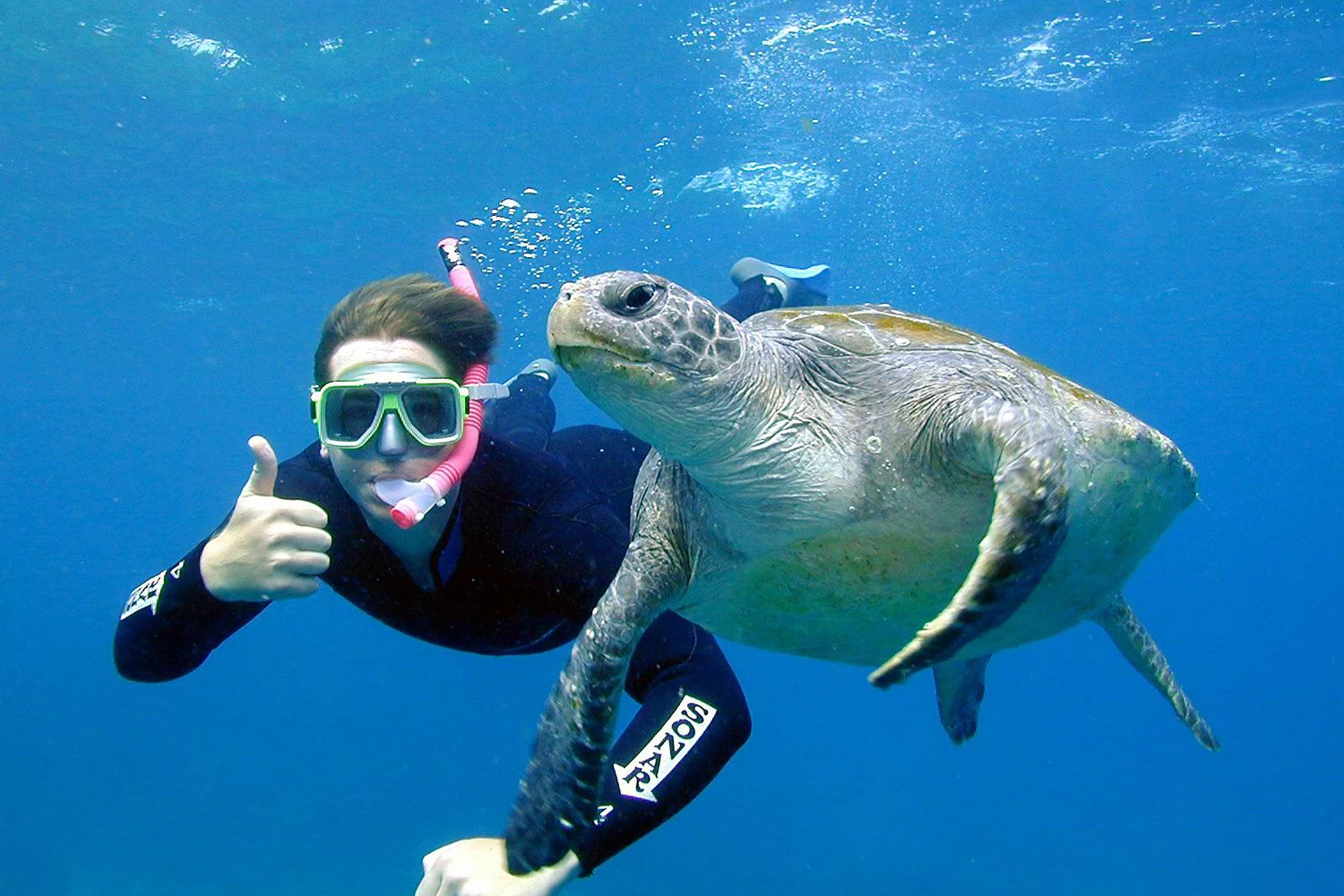
The granite outcrops known locally as Julian Rocks extend across 200 meters of ocean floor where three currents converge, drawing tropical species south and temperate species north into a single underwater crossroads. Indigenous Arakwal people call the formation Nguthungulli, naming it for the creation ancestor whose spirit inhabits the rocks. Snorkeling the wreck Byron Bay centers on the underwater channels and caves carved through volcanic rock rather than a shipwreck site. The northern arch creates a natural swim-through at eight meters depth, while the shallow eastern ledge holds cleaning stations where turtles pause for reef fish to remove parasites. Grey nurse sharks aggregate in the gutters between June and November, resting in the current while wobbegong sharks press flat against boulder surfaces year-round. Commercial operators run half-day trips with two snorkel sessions separated by a surface interval. Morning departures capture calmer sea states before afternoon winds build from the northeast. Water temperature ranges from 19°C in winter to 26°C in summer, with visibility stretching to 25 meters during offshore wind periods. Most tours supply wetsuits, masks, fins, and reef-safe snorkeling instruction for first-time participants. The marine reserve prohibits fishing, anchoring, and unsupervised entry, maintaining the site as a critical fish aggregation zone within the Cape Byron Marine Park. Operators follow approach protocols for threatened species and rotate mooring locations to prevent anchor damage to the substrate. Tour groups typically number 12 to 20 participants per vessel, with in-water ratios kept below eight snorkelers per guide during active sessions.
“Three ocean currents converge at Julian Rocks, creating the only mainland Australian site where tropical and temperate marine species coexist in significant numbers.”
Best Time for Snorkeling the Wreck Byron Bay
The best arrival window is 07:00–11:00, as morning tours typically offer calmer sea conditions and better water visibility. Planning your trip during this window provides the most stable environment for snorkeling at Julian Rocks Nguthungulli Nature Reserve.
Summer (Dec–Feb)
High traffic24°C–27°C water. Warm temperatures attract leopard sharks and manta rays to the reserve.
Autumn (Mar–May)
Moderate traffic22°C–25°C water. This period offers clear visibility and remains comfortable for snorkeling.
Winter (Jun–Aug)
Moderate traffic19°C–22°C water. Humpback whales migrate through the region, often visible from tour boats.
Spring (Sep–Nov)
Moderate traffic20°C–23°C water. Water temperatures begin to rise, creating stable conditions for marine life activity.
Verdict: For the best conditions, aim for a weekday morning arrival between 07:00 and 11:00 during the months of April or October.
Getting to Snorkeling the Wreck Byron Bay Tours
Julian Rocks Nguthungulli Nature Reserve is located approximately 2.5 kilometers off the coast of Byron Bay. Access is exclusively via commercial boat tours departing from the main Byron Bay township.
Parking available near Byron Bay main beach and boat launch areas
Commercial snorkeling tour vessels departing from Byron Bay
Entrance Fees for Snorkeling the Wreck Byron Bay
Entry to the Julian Rocks Nguthungulli Nature Reserve itself is free. Costs for visitors are determined by the mandatory commercial boat tour operators required to reach the site.
While the reserve has no entrance fee, visitors must pay for a commercial boat tour to access the snorkeling locations.
Checklist for Snorkeling the Wreck Byron Bay
Julian Rocks is accessible only through commercial tour operators, so advance planning ensures a smooth experience.
-
Book your tour slot in advance — Operators fill quickly during peak season and weather-dependent cancellations can shift availability.
-
Bring reef-safe sunscreen and a rash vest — The reserve prohibits chemical sunscreens; prolonged sun exposure on the boat requires protection.
-
Pack motion sickness medication if prone — Open-water conditions between Byron Bay and the rocks can be choppy, especially in afternoon winds.
-
Wear or bring a swimsuit — You'll board already suited up or change on the boat before departure.
-
Confirm your pickup location the day before — Operators depart from different marinas; clarify meeting points to avoid missing your slot.
-
Leave valuables secured on shore — Boats provide minimal storage and gear can get wet from spray.
Check availability
Frequently asked questions about snorkeling the wreck byron bay
Everything you need to know about snorkeling the wreck byron bay